The energy transition is moving fast, but there is a systemic issue undermining the deployment of energy infrastructure. Most renewable energy asset owners are making 20-30 year capital commitments, whilst still relying on historical weather averages to predict their returns and size their debt. This creates a critical blind spot for capital allocation and project performance. To protect these investments, organisations need a comprehensive physical climate risk assessment for renewable energy that connects climate science directly to financial outcomes.
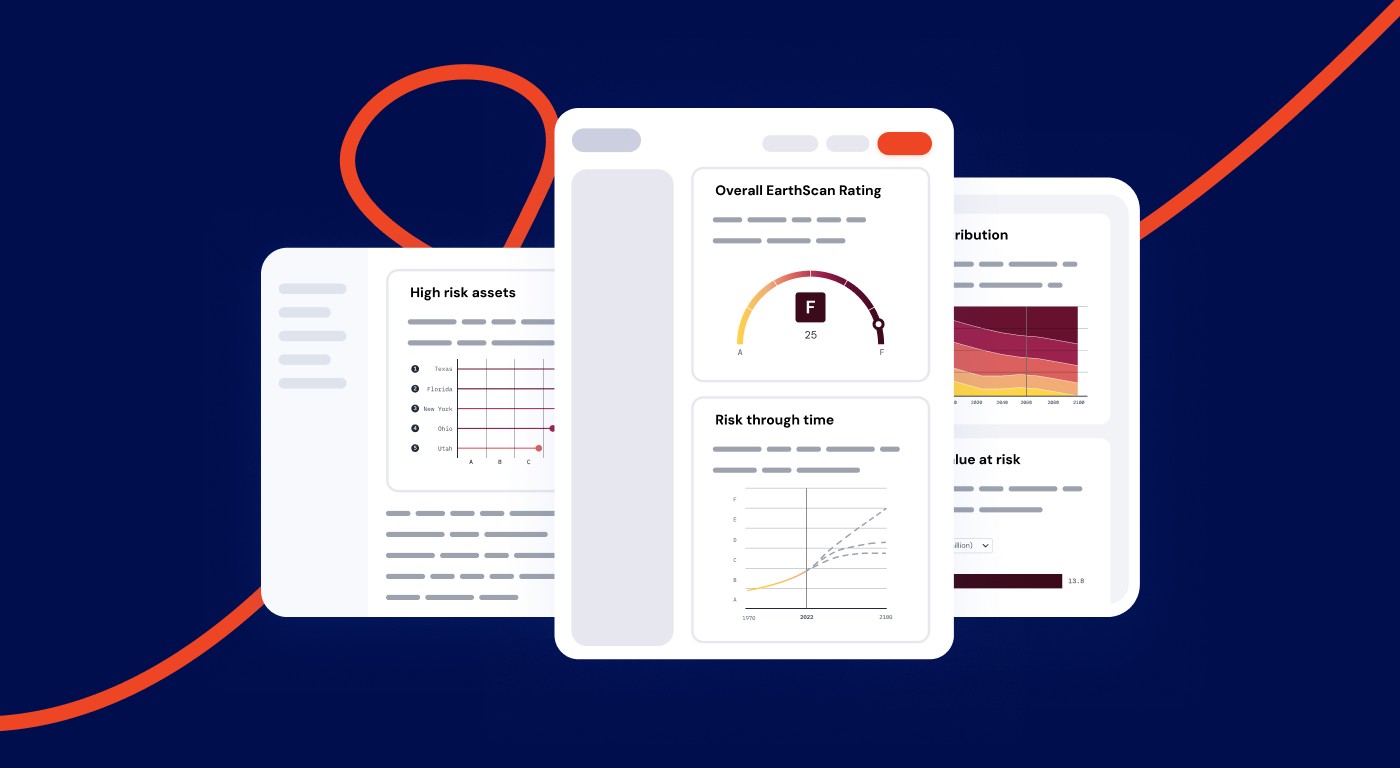
EarthScan Energy provides forward-looking, asset-specific climate intelligence that complement your P50 & P90 forecasts, and degradation factors so you can directly adjust your IRR, DSCR, and O&M costs .
Below are the key insights transforming how energy leaders manage physical asset risk.
Siting and due diligence: de-risking greenfield investments before breaking ground
For site assessment professionals, picking the wrong location can damage twenty years of returns. Traditional models use legacy regional indices that fail to show asset-level reality. To truly account for performance variability, investment teams require sub-kilometric resolution—data, capable of capturing hyper-local microclimates and terrain variations that directly influence asset performance.
An EarthScan Energy analysis, modelling the development of identical 32 MW wind farms across four operating sites, revealed that controlling for all variables bar climate-driven wind speed variability, identified a 1.65 pp IRR delta between the top and bottom performing sites; equivalent to EUR 22 million in gross returns or a drop in modelled asset multiples from 3.3x vs. 2.7x.
This proof point demonstrates why investment and project finance teams can no longer view a physical climate risk assessment for renewable energy as an optional compliance step. EarthScan Energy provides a quantified impact of climate change to support P50/P90 forecasting, IRR sensitivity analysis, DSCR stress tests, and exit valuations, ensuring that every financial model reflects true future climate constraints.
Enterprise risk and compliance: collapsing the internal translation layer
As physical risks multiply, corporate risk managers face severe operational inefficiencies when using legacy market tools. These platforms typically produce vague, regional risk scores that create an internal translation layer problem, where energy corporates must maintain costly internal engineering teams just to translate generic scores into concrete actions.
EarthScan Energy delivers asset-level physical risk quantification, not generic regional scores, allowing for meaningful integration into ERM frameworks.
Simultaneously, heads of ESG and sustainability can move past basic reporting.
Operations and orchestration: driving climate signals direct to SCADA systems
For technical operations teams, managing a physical portfolio requires moving away from reactive maintenance and toward predictive lifecycle planning. Robust climate risk intelligence for renewable assets must account for the fact that environmental impacts depend on the specific engineering setup of each asset.
EarthScan Energy delivers time-series and event-based climate inputs, such as threshold forecasts and triggers, that integrate directly with SCADA systems via API. The platform features advanced technology-specific risk modelling, recognising that hazard thresholds and degradation impacts differ between fixed-tilt vs. tracker systems, inverter types, and module classes.
By delivering precise physical climate risk data at an individual asset level with 40+ climate variables, EarthScan Energy allows technical directors to act before performance drops occur.
Portfolio management: protecting long-term valuations to 2100
Managing diverse, cross-border energy portfolios requires a unified, standardised approach to risk. EarthScan Energy enables consistent, comparable climate risk scoring across technologies and geographies. By offering forward-looking metrics and continuous projections to 2100, the platform supports both investment review cycles and ongoing asset management decisions. This level of operational clarity helps portfolio managers demonstrate long-term asset resilience to institutional investors and protect exit valuations against future climate volatility.
Moving from climate reporting to strategic asset resilience
Treating climate risk as an abstract reporting requirement is no longer a viable option. As asset lifecycles span decades, the gap between generic regional data and asset-level reality represents a direct threat to capital stability, project finance, and operational insurance. Navigating this shift successfully requires moving away from backward-looking averages and static risk scores.
By integrating advanced climate science, supercomputing power, and asset-specific analytics, EarthScan Energy eliminates the friction of the internal translation layer and turns climate volatility into a manageable business variable. From optimising early-stage siting and protecting project IRR to adjusting predictive maintenance triggers directly into active SCADA systems, the future of renewable energy belongs to organisations that secure predictability at the physical layer.
The core dilemma facing modern energy infrastructure is simple: we are underwriting tomorrow's multi-decade assets using yesterday's environmental assumptions. Mitigating this blind spot requires a fundamental paradigm shift; moving away from generic, retrospective regional data and adopting asset-specific, forward-looking predictive models that directly link climate volatility to financial engineering.
Understand future climate damage before it impacts your renewable portfolio. Speak with our team to explore how EarthScan Energy can support your asset risk assessments or book a demo today.